Posted by: EVDomains on 08/22/2026
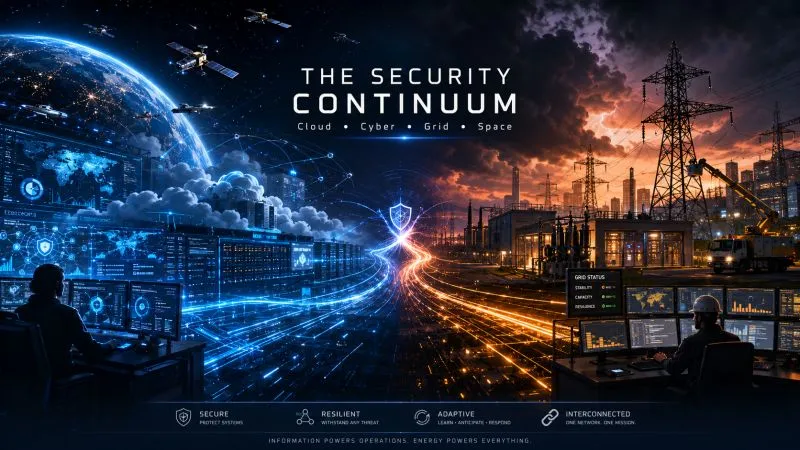
THE SECURITY CONTINUUM: CYBER, CLOUD, GRID AND SPACE
Eveillard Domains & Network
Strategic Digital Assets for the Electrification Era and Beyond
The next era of security will not be organized around isolated industries.
It will be organized around interconnected systems. Cyber, cloud, grid and space are often discussed as separate markets, separate technologies and separate procurement categories. That separation is becoming increasingly artificial. They are now layers of the same operational architecture. Cybersecurity is the horizontal trust layer. It protects identities, networks, software, data, devices and communications. Cloud infrastructure is the computational layer. It hosts applications, artificial intelligence, command systems, analytics, digital identities and increasingly important public and private workloads.
The electricity grid is the continuity layer. It supplies the power required by data centers, telecommunications networks, transportation systems, hospitals, financial institutions, military installations and nearly every other component of modern civilization. Space is the sensing and coordination layer. Satellites support communications, navigation, timing, observation, warning, tracking and the movement of information across vast distances. None of these layers can now be secured in isolation.
A cloud platform cannot remain operational indefinitely without dependable electricity and communications. A modern grid cannot be effectively managed without software, sensors, data processing, remote communications and increasingly cloud-connected operational systems. Space-based assets depend on ground stations, digital identity, data networks, computing infrastructure and reliable power. Cyber intrusions can move from information systems into operational systems. Physical disruption can disable digital infrastructure. A failure in one layer can propagate rapidly into the others.
This is why resilience is no longer simply about having a backup. Resilience means the ability to detect disruption, absorb impact, isolate affected systems, preserve essential functions, recover rapidly and continue operating under pressure.
Golden Dome Makes the Architecture Visible
Recent U.S. Space Force awards associated with Golden Dome illustrate the scale and direction of this convergence. L3Harris received a reported $955 million award to produce 18 missile-warning and tracking satellites, while Sierra Space received approximately $800 million for another 18 satellites. These are not merely purchases of objects to be placed in orbit. They are components of a much larger system involving sensors, communications, processing, secure data movement, artificial intelligence, command functions, terrestrial infrastructure and continuous power.
The stated Golden Dome architecture includes space-based sensors and interceptors, but its success ultimately depends on the seamless integration of all participating systems. That word—integration—is the key. The satellites may be the most visible elements, but the architecture beneath them is equally important:
Secure cloud environments must receive and process data. Communications networks must move that data without unacceptable delay or interference. Artificial intelligence must help distinguish relevant signals from noise. Identity and access systems must determine who and what can be trusted. Electricity infrastructure must continue supplying power. Command systems must remain available even when individual components are disrupted. The same architectural reality applies beyond Golden Dome.
It applies to utilities, hyperscale cloud operators, data centers, satellite companies, telecommunications providers, transportation networks, financial systems, emergency services, critical manufacturing and artificial-intelligence infrastructure.
The distinction between “digital infrastructure” and “physical infrastructure” is steadily disappearing. Cloud and Grid Are Two Strategic Surfaces
Within this larger continuum, cloud and grid occupy two especially important positions. The cloud is the virtual operating environment. The grid is the physical energy and operational backbone. Cloud security protects distributed computing, applications, identities, workloads and data. Grid security protects electricity delivery, operational technology, communications, control systems and continuity. Cloud integrity without grid resilience is incomplete. Grid resilience without cloud and cyber integrity is increasingly obsolete. Space awareness without trusted communications and reliable processing is blind. Cybersecurity without an understanding of cloud, grid and space dependencies is too narrow for the systems now being built. These are not temporary technology trends. They are durable categories connected to national infrastructure, enterprise continuity and long-term public safety.
Security Is Becoming Mission Assurance
The vocabulary of the market is also changing. “Security” often describes a protected condition. “Resilience” describes the ability to endure and recover. “Continuity” describes the ability to keep functioning. “Mission assurance” describes confidence that essential operations will succeed despite disruption, attack, failure or uncertainty. The emerging market will require all four. Organizations will not be judged merely by whether they installed protective tools. They will be judged by whether their systems remained operational when those protections were tested. That distinction will shape technology platforms, procurement programs, investment decisions, company identities and digital brands.
Digital Names Are Strategic Infrastructure
A category-defining domain is not merely an internet address. It can become the entry point for a company, platform, public-private initiative, technology consortium, procurement marketplace, educational authority or national infrastructure program.
The strongest digital names communicate their purpose before the visitor reads a sentence. They reduce explanation.
They improve memorability. They can accommodate multiple technologies without trapping the owner inside a narrowly defined product. They can support recruitment, investment, procurement, public education, partnership development and long-term category leadership. This is why our portfolio thesis is category-first rather than company-first. Eveillard Domains & Network identifies broad, durable areas of technology, energy, mobility, infrastructure and artificial intelligence. The assets are independently owned strategic digital properties. Unless expressly stated, they do not imply affiliation with, sponsorship by or endorsement from any third-party company or trademark owner.
Our interest is not in imitating a particular participant.
Our interest is in understanding where entire industries are moving—and in securing the language capable of representing those industries when they arrive. Cloud and grid belong within that strategic framework because they are no longer background utilities.
-They are operational theaters.
-They are economic infrastructure.
-They are national infrastructure.
-They are inseparable from cybersecurity, artificial intelligence, communications, energy continuity and space-based systems.
The Question Now Before the Market
At the highest level of the naming hierarchy, Cybersecurity.com is discussed in eight-figure terms, while CloudSecurity.com is positioned within the elite CloudCom portfolio. Those category names establish the scale of the market—but they may also place exact-category ownership beyond the practical reach of many companies, contractors, investors, integrators and institutional stakeholders. That leaves one deliberate question:
Is the corresponding “defense” iteration merely a more affordable alternative—or is it actually the stronger, more active and more operational category identity for those charged with protecting the cloud and the grid? We believe that question deserves to remain on the record. Eveillard Domains & Network
Strategic Digital Assets for the Electrification Era and Beyond
CYBER CLOUD GRID AND SPACE SECURITY
GridDefense Insights explores the evolving landscape of infrastructure resilience, intelligent grid operations, microgrid strategy, and critical‑system security. This section provides foundational perspectives and conceptual overviews that support our broader mission.
A Forward‑Looking Discipline
Grid defense is not a static field. It evolves as infrastructure evolves.
As energy systems become more distributed, more digital, and more interdependent, grid defense becomes the lens through which reliability, resilience, and security are understood.
It is the foundation of modern infrastructure stability. GridDefense.com does not engage in firearms, tactical equipment, or weapons‑related industries.
Explore Grid Defense Insights
This section highlights key resources designed to support learning and development in grid security.
Infrastructure Resilience
This topic covers essential concepts to enhance your understanding of adaptive energy systems.
Grid Cybersecurity
This topic delves into advanced strategies and techniques for defending power grids.
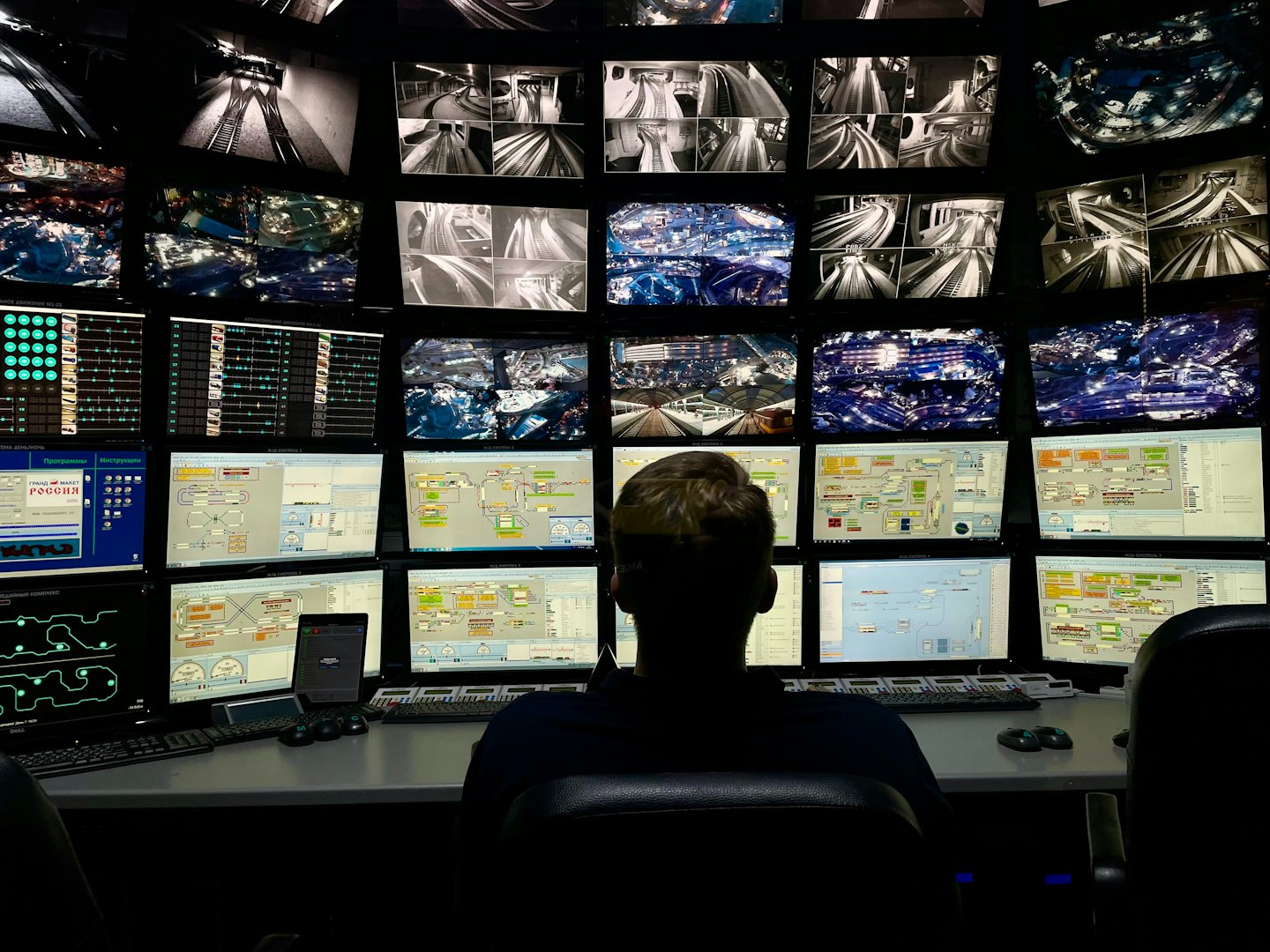
Intelligent Operations
Explore this topic for foundational knowledge and insights on AI-driven grids.
Strengthen Your Infrastructure and Grid Resilience Today
This section encourages readers to explore insights and discussions on grid defense, cybersecurity, and intelligent operations. It highlights the benefits of infrastructure resilience and offers clear instructions for engagement.